
The Ingredients to an Exemplary School are all in here.
The Ingredients to an Exemplary School are all in here.
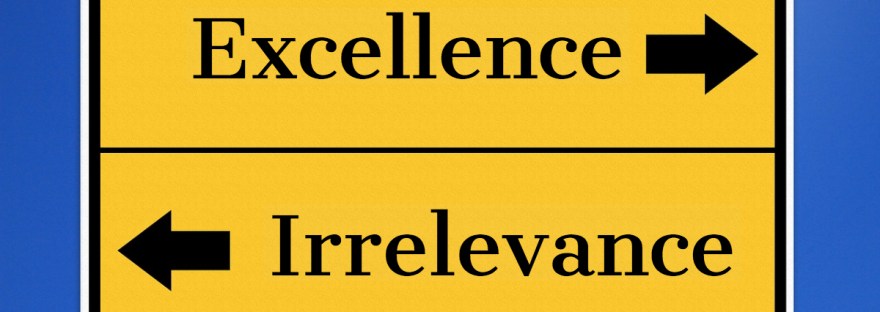
Harsh? Not really.
With the infotech and biotech revolution upon us, it is more important than ever to embrace the process of building high performing schools for ALL students. Creating equity is not about “teaching to the middle” or mediocrity but rather higher achievement and building student capacity.
One major challenge in reaching higher performance is the identification of skills and standards that will “stand the test of time.” Recognizing that “change is the only constant” is perhaps the beginning of creating a vibrant and performance-based school. Improve now, not just in some superficial way that placates those entities demanding it but rather in a substantive manner, or chance being left behind.
While some researchers suggest that we shift to exclusively teaching communication, collaboration and creativity, a combination of those skills with having essential knowledge in various fields appear more prudent. Possessing information has always been powerful but having the knowledge to interpret it leads to innovation and real solutions. Having the ability to discern fact from fiction and to go beyond the obvious to that which is inferred provides students with the foundation to think critically and proactively.
Moving an organization to embrace such skill sets and high standards for ALL students remains a daunting task as evidenced by the myriad of underperforming schools. Evidence suggests that breaking through stakeholder paralysis to commit to higher performance is a risky venture for those in leadership roles. The reality is that leaders really do not have a choice. Select Excellence or become Irrelevant.
Performance is Key!

The 2018-2019 School Year is Here! Schedules are built and Orientation Assemblies, Welcome Back Programs, and Class Meetings are planned.
It is a routine that is repeated in almost every school in America. While many students call these programs “rule assemblies” and many administrators dread them, almost everyone considers them a necessity. No matter how you “dress up”
these programs or make them a moment of celebration, they are essentially
information sessions. Our program followed a format: first, the Welcome Back,
then here’s some good information and by the way, here are the rules, regulations, and consequences. To some degree, it was almost like a “good cop, bad cop”
routine.
The counselors, nurses, class officers and class advisors, reviewed activities,
events and key dates in the coming year while the assistant principals reviewed the
“nuts and bolts” of the school handbook. If done well, it is a well-choreographed
dance that set the tone for the year to come.
From my perspective as principal and later as superintendent, the opening of
school was an exciting moment. It was a new beginning, an opportunity to
motivate but more importantly, a moment to inspire. It was an opportunity to reach
out and to have students reflect on what was possible and to set goals for the year.
With over 1,000 students in the auditorium for one such meeting, I asked them to
reflect on their last year. To close their eyes and to reflect about what went well
and what could have been better. Next, I asked them to open their eyes and
recognize that it is a new beginning.
I repeated the activity but this time I asked if they could Imagine what type of life
they desired and to reflect on what you have to do to get there. When they
opened their eyes, I assured them that it was great to Imagine and Dream but it
is more important to Act on those dreams and to Act one needed a Plan. I
encouraged them to develop that plan by thinking about three things that can
help them to fulfill that dream. For many, it truly was a new beginning and new
opportunity.
Regardless of past level of performance, I asked them to set a goal that they
thought was possible. [It may be as simple as becoming a better student. If you
were a D student then set your sights on becoming a C student. If you were a C
student, then set your sights on becoming a B student and so forth.] Again, I
asked what it will take for them to make those gains. It was explained that we
All have an opportunity to improve. No one is perfect and we should All seek
improvement.
The same concept was also extended to administrators and staff. For them,
Continuous Improvement was never really an option. The faculty and staff
regularly participated in district and building goal setting along with developing
plans for an aligned professional development program. While it was recognized
that activities and events were critical to the social and emotional fabric of the
organization, performance was our priority.
Too often, managerial and operational minutiae obscure the instructional focus of
an organization from its real mission to maximize student potential. If authentic
student growth is going to take place in the 2018-2019 school year, then, the
“disconnections” that hinder student achievement must be identified and
plans with measurable performance standards which ignite growth must be
adopted immediately.
If we dare children to Imagine and to Believe that those dreams are possible, then
we must Act to develop a culture in which those dreams become a reality.
Accepting mediocrity is not an instructional culture that nurtures improvement.
“Good Enough is really Not Good Enough!”
Let 2018-2019 become a new reality in which the goal of improved performance is
the instructional priority for ALL children and that it becomes the real focus for
ALL leaders in the organization.
Vincent F. Cotter, Ed.D.
Co-founder, Exemplary Schools Organization.
Co-Author, “Performance is Key: Linking Leadership to Excellence.” Rowman
and Littlefield Publisher.
Former Superintendent, Principal, Asst. Principal, Department Chair and Teacher

With the completion of graduation ceremonies and various end of school year events, most school administrators take a moment to breathe a sigh of relief and a smile for a job well done. After the handshakes and “pats on the back,” the reality of reorganizing the district or school begins to set in.
In many districts and schools, this process was set in motion weeks before the closing or end of year ceremonies but fine-tuning the process begins in earnest at the end of the year. There are schedules to be developed or refined, teachers to be assigned or reassigned, teachers to be hired, bus schedules to be developed and mailings scheduled for delivery. Each activity has a timeline and is choreographed to reflect an organization that knows how to turn itself around for the next school year. Within each step, there is an inherent message that we’ve done this before and we know how to open and run a school or district. Way too often, it is simply replicating the status quo.
Again, while districts are excellent at opening the doors for another year and duplicating past programming, few schools or districts take the time to review how they can improve performance. Few take the time to have frank discussions with staff as to what worked and what did not. Even fewer districts and schools offer administrative, board and teacher retreats in the summer to discuss district goals, attainment of those goals, indicators of success or frankly how they can “tweak” instruction, policies or procedures that can ultimately make a difference between success or failure. Few take the time to locate the disconnections or obstructions that hinder student achievement and student success.
All too often the focus on the new school year is on important operational procedures such as lunch coverage, hallway duty, elective coverages, in-house suspension, staff coverage, assignments and disciplinary procedures that allow the school to run in a smooth manner but often performance issues, in the context of school reopening meetings, is not considered a priority. Rarely, do the organizational meetings address how children are learning, why they learned a particular concept or how we can engage them more effectively in the classroom. Even more rare at the secondary level are discussions about the number of students failing a particular subject and why. Overall, instructional discussions devolve into the number of times faculty will be observed, the procedures around observation (announced or unannounced) and possibly criteria for those observations etc.
Recognizing that Performance is Key, Cotter and Hassler developed the School Systems Crosscheck to assist in the identification of disconnections within a school or district that impede or hinder student achievement. The data from this instrument can stimulate discussions in the summer as to how to improve learning and ignite student achievement! Sometimes the difference between success and failure is simply found within the nuance of implementation but to find that nuance you have to dialogue about performance.

Dr. Vincent F. Cotter and Dr. Robert D. Hassler
Having recently attended the National School Boards Association Conference in San Antonio, Texas, an overwhelming concern expressed to us was the question of how to address stagnant or poor student achievement in a school or school district. Some board members were even concerned that any internal dialogue about student achievement to other board members or the superintendent might actually upset the “apple cart” of existing relationships and plummet the school or district into one of conflict and dysfunction.
While we recognize the importance of having a functional board that has a positive relationship with the superintendent, we also do not believe that having a dialogue about achievement and maintaining a positive relationship are mutually exclusive of each other. It’s not a conversation that should be avoided but rather embraced because each student’s future depends on it. Public education is often a family’s only option and is really the only equalizer to social mobility. To reach higher performance levels all stakeholders must discuss it with integrity and mutual respect.
At the same time, we believe that discussing student achievement among board members and the superintendent is really one of charting the future by incorporating transparency and collaboration into the process. It is not about micromanaging a district but rather providing a direction for improvement and aligning the resources to do it.
The Exemplary Schools Organization approach is a focused investment in the human potential of your district without the disruption or turmoil of meaningless change. Some might say, Why? We choose to say, Why Not! We prefer to say that it is not about Excuses but rather Solutions! It is about working together in a synergistic manner.
As a board member, we encourage you to enjoin all stakeholders on the journey toward higher performance. It is not about blame or the past but rather a collaborative problem solving to reach the future. It is the essence of a team working toward the expected and entrusted goal of higher performance.
FAQ
Isn’t Student Achievement the Superintendent’s job?
For sure but every member of the team can play a role. If achievement in your school or district is flat, stagnant or poor, you have a responsibility to begin a dialogue about how it can be reversed. This dialogue is not adversarial but rather collegial, professional and collaborative. Remember the board is about the big picture and the superintendent’s role is about the “weeds” of actual implementation.
Will a discussion on achievement change my relationship with the Superintendent or fellow board members?
It depends on how the topic is discussed. We believe that if the topic is approached in a collaborative, problem-solving manner, then it should not and the superintendent should welcome such a partnership on such a complex issue.
How do I convince fellow board members or other “fence sitters” to engage in such a discussion?
While board members are usually elected or appointed due to campaign positions, the overarching responsibility of each board member is to assure that each student, upon graduation, is prepared for the future. In doing so, each student should have the inherent right to maximize their learning potential. It is each board member’s moral and ethical responsibility to deliver this inherent right which supersedes any election platform or promise. Parents expect it and Students deserve it!
Does a focus on student achievement actually cost more money?
Not really. We believe that our approach focuses on building the internal capacity of the organization by identifying the disconnections that impede student performance.
How does the Exemplary Schools Organization get everyone on the “same page?”
We utilize data through an instrument that highlights the disconnections among stakeholders. When combined with other data, it will provide a pathway toward improvement and establishes a sense of urgency to collaborate toward a common goal.
What process does the Exemplary Schools Organization advocate?
First and foremost, we are about collaboration, team, and transparency. In the end, all stakeholders of the organization must believe in the process and the plan to reach higher performance levels. We begin by eliminating the disconnections and then unifying everyone in a course of action that is reflective of the district’s values, beliefs, mission, and goals but also one that focuses on Alignment, Atmosphere, Accountability and Adept Leadership of the organization.
 Exemplary Schools Organization